
Jeevasamadhis in Puducherry

Sri Lakshmana Samigal
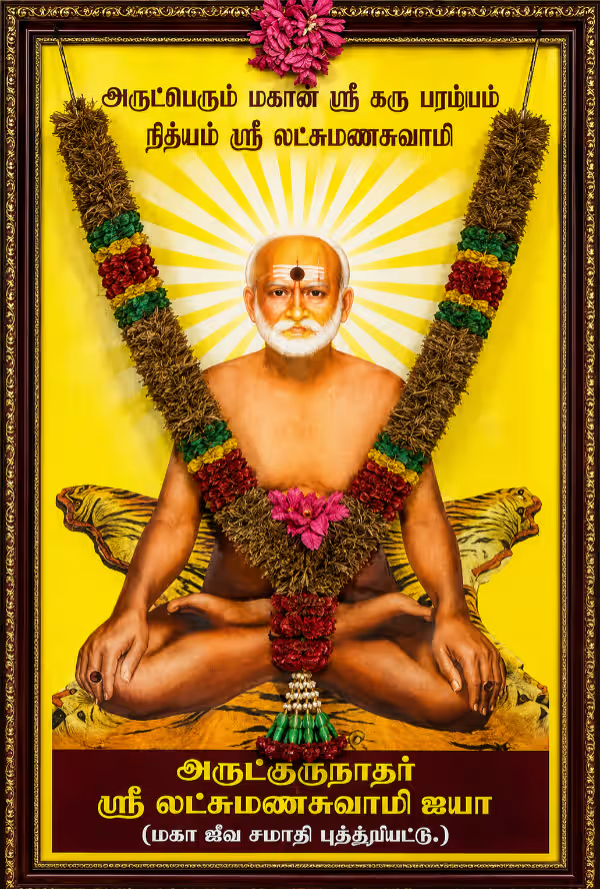
Sri Lakshmana Samigaḷ, a mysterious Siddha who attained samādhi in 1947, remains one of the most intriguing spiritual figures associated with Puducherry. Very little is known about his early life, and much of his story survives through local traditions and oral accounts.
A Wanderer of Minachipet
Sri Lakshmana Samigaḷ spent much of his time wandering through the streets of Mīṉāchipēt in Puducherry. He spoke a mix of Telugu and Tamil and lived a simple life, often doing small household tasks for local residents. At night, he would stay in the Amman temple, observing long periods of fasting.
People believed he communicated with Goddess Ambika. Because of this, many women approached him seeking guidance and remedies for their problems. Over time, large crowds began gathering around him at the temple. Realizing the disturbance it caused, Sāmigaḷ quietly left the temple and moved to Puducherry’s big market, where he worked as a loadman.
The Eighteen-Day Trance
One day, during peak business hours, Sāmigaḷ suddenly sat down in the middle of the road under the scorching sun, appearing deeply sorrowful. Despite efforts by drivers, police, and passersby, he could not be moved. Traffic had to be diverted.
As days passed, people began to worship him. On the fourth day, heavy rain accompanied by thunder and lightning poured down, yet Sāmigaḷ remained unmoved. For eighteen days, he sat there in complete stillness.
Finally, he opened his eyes, looked around, and laughed.
This incident divided public opinion—some saw him as a madman, while others revered him as a realized Siddha.
Life in Muthialpet
After this incident, Samigal moved to Muthiālpēt, where he was widely regarded as a holy man. Merchants treated him with respect and allowed him to wander freely in their shops. One day, in a shop, he picked up a one-rupee coin and threw it away. Strangely, the shop experienced excellent business that day.
Final Journey and Samādhi
Leaving Muthiālpēt, he walked north toward Kīlputhupēt and reached the Iyannar temple. There, he sat in Padmāsana (lotus posture) and entered his final state of samādhi. He attained samādhi on December 21, 1947.
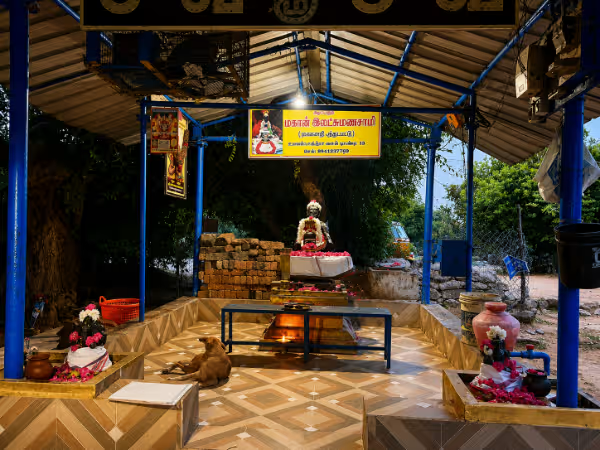
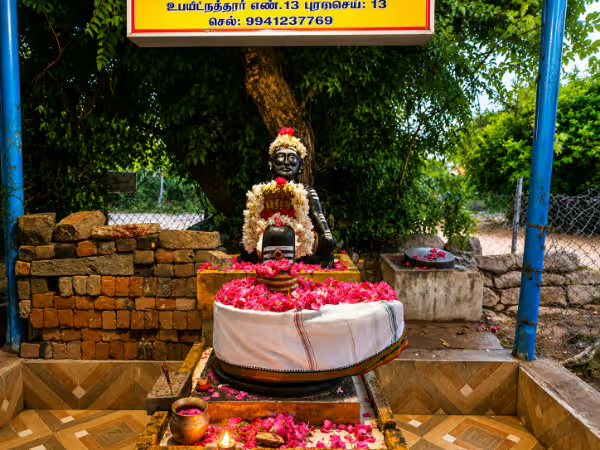
The next morning, people gathered in large numbers and enshrined his body in a samādhi. Even today, his samādhi is said to be well maintained and continues to attract devotees.