
Jeevasamadhis in Puducherry

Sri Navapashana Siddhar
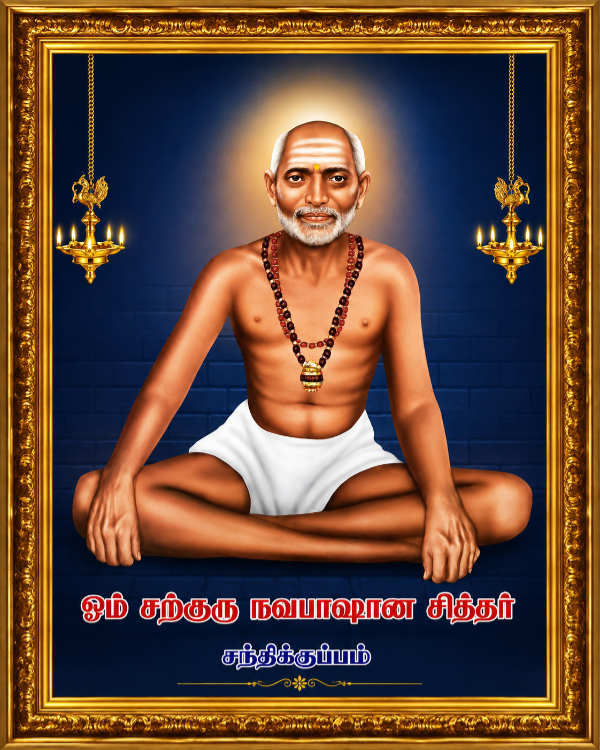
For a human being to sail across the ocean called life, a boat- called the body is essential. If this boat —the body —remains strong and stable, a person can journey in any direction and reach the goal he desires. But if the boat loses its strength, he cannot continue toward his intended destination. Realizing this truth, the Siddhars (enlightened sages) strengthened and preserved their bodies by consuming Kayakalpa (rejuvenating) herbs and practicing Pranayama (breath control).
Following this noble path, one sage fortified his body through Kayakalpa herbs and controlled his mind through Pranayama practices. To benefit ordinary people, he prepared a unique medicinal formulation that combined many rare herbs he had discovered and used. He lived his life solely for the well-being of others, dedicating everything to the service of humanity. He devoted his entire life to God and resided in a place called Vadalur. This sage wore only a simple piece of cloth (veshti) around his waist. He treated people’s ailments using herbal medicine and spent his remaining time in deep meditation, leading a life of wisdom and spiritual discipline.
The Sacred Pilgrimage
As time passed, the sage developed a deep yearning to visit and worship the deities enshrined in various sacred places. Driven by this devotion, he set out on a pilgrimage on foot to several holy sites. After visiting many temples and beholding the divine presence in each, the sage finally reached Kanchipuram via Othiyampattu. There, he had the divine vision of Sri Kasi Viswanathar and then continued his journey. Walking a little further, he arrived at a cremation ground near Sandhikkuppam.
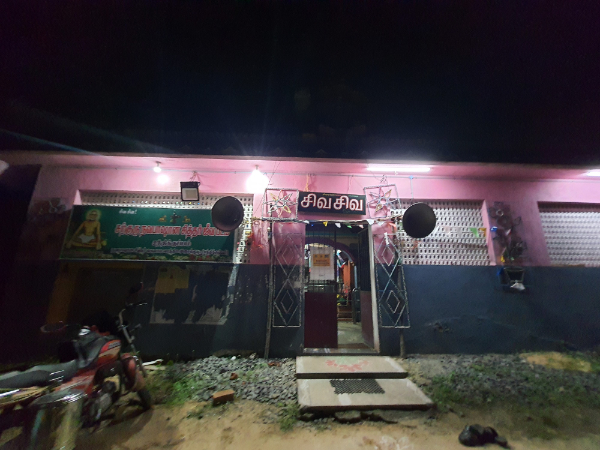
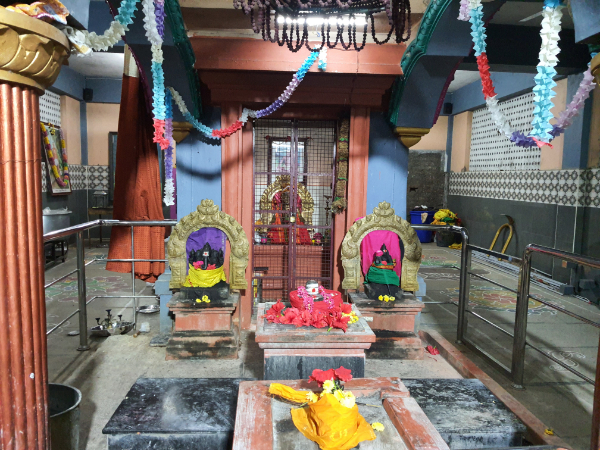
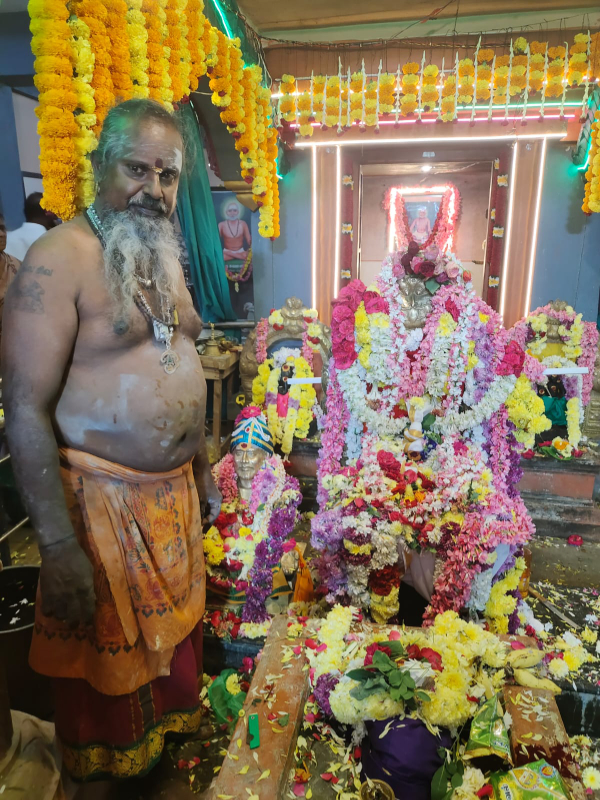
The village of sorrow and Divine Healing
At that time, the people of Sandhikkuppam were afflicted by a mysterious disease that was claiming numerous lives. As no one knew a suitable cure, they were unable to provide proper treatment. Death had become a daily occurrence in the village —before they could return home after burying one dead body, another person would have already passed away. The wails of mourning never ceased throughout the village. The deceased were so many that they had to be buried or cremated in groups, with no time even to perform the proper funeral rituals. The entire village had turned into a vast cremation ground filled with the cries of grief and despair. Seeing the assembled people at the cremation ground, the sage asked, “Why are you burying and burning so many bodies? How can so many deaths occur in a single day?” The sorrowful villagers replied, “Swami, a strange, unknown disease has struck our village and is taking lives in large numbers. Since we do not know what this illness is, we are unable to find a proper remedy. We have no one to turn to for help or guidance. We who are still alive today are uncertain whether we will live to see tomorrow. We do not know whether to keep burying the dead or struggle to save ourselves from death.”
All right, come! Let me see those who are afflicted. I will give them whatever treatment I can,” said the sage. These words from the sage filled the villagers with new hope. They immediately took him to their village and showed him the people suffering from the strange illness. The sage always carried with him a special, combined herbal medicine capable of curing all kinds of diseases. Even if this medicine was soaked in water for an entire day, it would not dissolve. The sage would place it in water, allow it to infuse, and then give that water as a remedy to the patients. Whatever the illness might be, the moment they drank that water, their disease would be cured. Using this rare herbal preparation, the sage gave the infused water to the sick people of Sandhikkuppam, and they all recovered completely. The cries of death that once echoed through the village came to an end. Since the villagers did not know the name of the divine being who had saved them, they began calling him Navapashana Siddhar (The Sage of the Nine Poisons). Once the mysterious disease had completely vanished from Sandhikkuppam, the Siddhar decided to leave the village. He told the people, “My work here is done. I must continue my path.” But the villagers, who had been saved from the clutch of death by him, could not bear to see him go. With deep humility, they pleaded, “Swami, please stay with us as our guiding light. Remain here in our village and bless us.” Moved by their love and devotion, the Siddhar accepted their request. The villagers then built a small hut for him to live in. From that day onward, the Siddhar made Sandhikkuppam his permanent dwelling place. Whatever illness afflicted the people, the Siddhar cured them all through his divine herbal medicine. People from nearby villages, hearing of these miracles, began coming to see him. People from far and near continued to visit the Siddhar. Regardless of the hour or their condition, he never turned anyone away.
Without a trace of displeasure, he treated every patient with care and compassion. Most of the time, the Siddhar remained deeply immersed in meditation. Sometimes, when devotees or the sick came to see him, he would gaze at them intently. Then, silently uttering certain sacred mantras within his mind, he would scoop up a bit of soil and apply it to their foreheads. Miraculously, the moment the soil touched their skin, it would transform into sacred ash (vibhuti). Those afflicted with illnesses would be cured instantly and return home in good health. Because of his continuous service and boundless compassion, the fame of the Siddhar spread —not only throughout Sandhikkuppam but also to nearby villages. Many disciples began to serve him devotedly.
Samadhi of Siddhar
The Siddhar eventually realized that the time for his Samadhi was drawing near. He informed his disciples about this and expressed his wish to impart all his spiritual wisdom to them. However, none of the disciples were willing to accept it, considering it their greatest blessing to continue serving their Guru until his final moment. Later, the Siddhar gathered the villagers and said, “In a few days, I will be leaving this mortal body. After my soul departs, do not burn or bury my body in the cremation ground. Instead, entomb me in a raised mount within the village itself.” He then instructed the villagers, “Each one of you bring a handful of raw rice. Cook it together into pongal (boiled rice offering) and bring it here.” The villagers, following his wishes, each contributed a handful of rice and prepared the offering. The Siddhar then inscribed certain sacred mantras on a copper plate and placed it atop the cooked rice. The copper plate immediately dissolved and merged completely with the food. After that, the Siddhar partook of the sacred meal, entered deep meditation, and attained Samadhi.
The Miracle After Samadhi
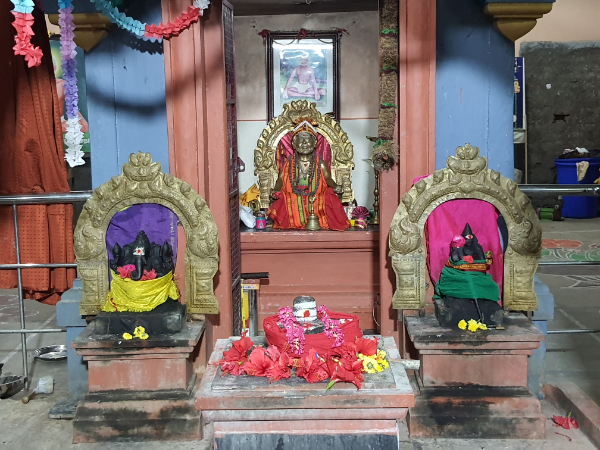
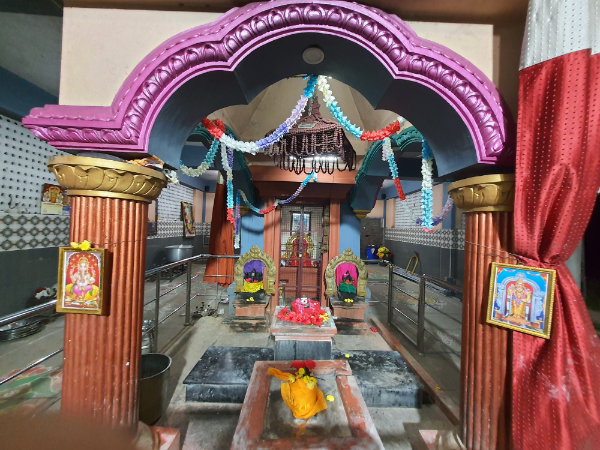
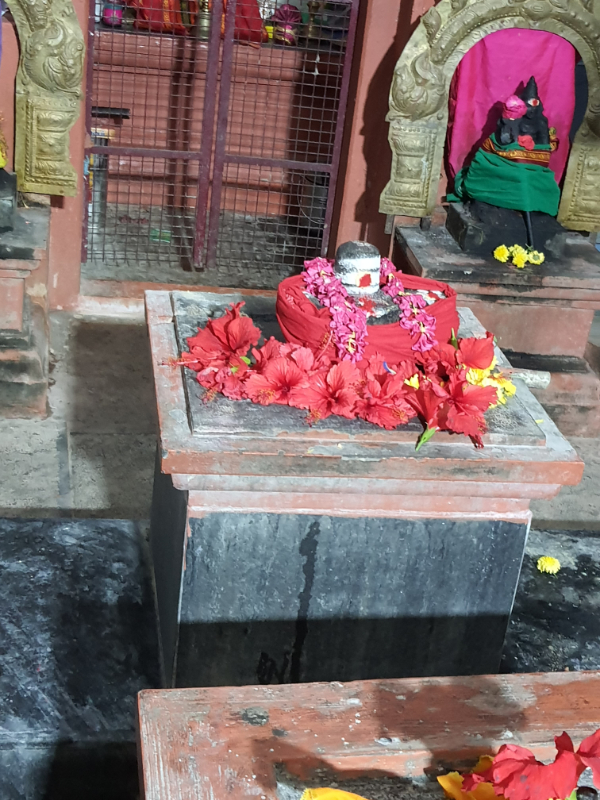
The villagers gathered together and, according to the Siddhar’s wish, entombed him in Samadhi at a raised spot near a palm tree in the middle of the southern fields of the village. Believing that the Siddhar would have liked it, they placed a tender coconut on top of the Samadhi, leaving it open. After some time, people gradually forgot about the Siddhar. One day, a cowherd boy who was grazing cattle near the site playfully kicked the coconut that was placed atop the Samadhi. The moment he did so, his leg became stiff and paralyzed. No treatment could cure it despite many efforts. Only then did the boy’s parents learn that he had playfully struck the coconut placed on the Siddhar’s Samadhi. Deeply remorseful, they went to the Samadhi, repented sincerely for their child’s unknowing mistake, and performed circumambulation around it (pradakshina). A few days later, on the day of Thai Poosam, they consecrated a small Shiva Linga atop the Samadhi and prayed earnestly for their son’s leg to be healed. Miraculously, the boy’s leg recovered completely. Through this act, the Siddhar reminded the villagers that he still resided in the Samadhi and made them realize their negligence in forgetting him. From that day onward, the people of the village understood the divine power and grace of the Siddhar.
Sacred Practices and Celebrations
Even today, they continue to worship him with deep devotion. Every year, on the day of Thai Poosam, a festival known as the Raw Rice Porridge Offering (Pacharisi Kanji Vaibavam) is celebrated in his honor. Additionally, the Guru Pooja is performed grandly on Kaanum Pongal day. It is believed that Navapashana Siddhar lived approximately 250 years ago.
Source: Story received from Temple