
Jeevasamadhis in Puducherry

Sri Vedanta Swami
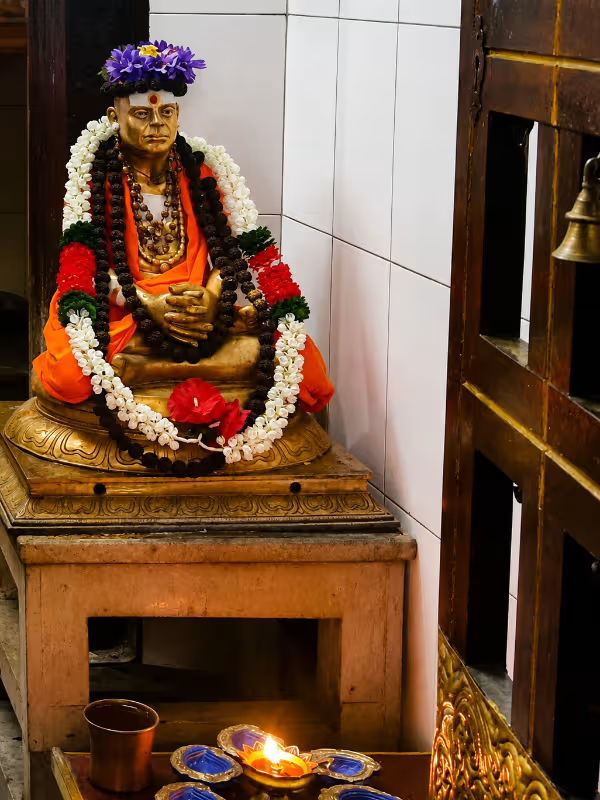
Located in Thiruvalluvar Nagar Road, Vasant Nagar, Puducherry, the sacred place known as Sri Velayudha Ishwarar Temple stands today as the Jeeva Samadhi of Srilasri Guru Vedananda Swami Siddhar Peedam, a center of deep spiritual energy and Vedantic wisdom.
Long ago, the great sage Agathiya Mamunivar taught Vedanta near the Puducherry seashore. This divine tradition continued through many sages, including Sri Aurobindo, and later reached the Tamil people through Vedananda Swami.
The Child Saint – Thandavarayan
Sri Vedananda Swami was originally named Thandavarayan, born in 1872 in Thirumarukal, Tamil Nadu, to Sokkalinga Mudaliar.
From a very young age, he showed spiritual inclination. At just two years old, he left home silently and embarked on a sacred pilgrimage (Thiruthala Yatra), traveling on foot to holy places associated with Thevaram hymns.
He studied under many gurus, gaining deep knowledge in Vedanta and Saiva Siddhanta.
Spiritual Training and Gurus
During his journey, Thandavarayan met several spiritual masters. Inspired by Rajakrip Periyar in Viralimalai, he studied Vedanta and sacred texts like Thiruvasakam, Songs of Pattinathar, Songs of Thayumanavar.
He later became a disciple of Mauna Swami Chidambaram, who recognized his extraordinary recitation ability and gave him the name Velayutham.
He further studied Saiva Siddhanta under learned teachers, mastering texts such as Sivajnana Bodham, Kaivalya Navaneetham, Prabulingalila. He also received advanced spiritual teachings from Veera Sekara Gnana Desikar in a Shaiva monastery.
During his travels, Thandavarayan had the rare opportunity to meet Swami Vivekananda on the banks of the Tamiraparani River. This encounter further strengthened his spiritual path.
A Life Between World and Renunciation
Due to family circumstances, he returned home and, out of compassion, married his sister’s daughter. Later, he moved to Puducherry and started a small shop on Nehru Street, which people fondly called “Saamiyaar Kadai” (Swami’s Shop). After the passing of his wife, he chose the path of complete renunciation.
Rise as Vedananda Swami
Renouncing worldly attachments, he entered full ascetic life. Thandavarayan began teaching Vedanta in Puducherry. His powerful discourses attracted large crowds. People began to recognize him as a great Vedantic teacher and lovingly called him Vedananda Swami. He had many disciples, the main ones being Balakangadharam Pillai, Dandapani Swami, Muthukumaraswamy.
Final Journey and Samadhi
With the support of his disciple Muthukumaraswamy, Vedananda Swami continued his teachings across Puducherry.
Despite failing health and eye problems, he never stopped sharing spiritual wisdom.
One day he came to know the news that a Kumbabhishekam was going to be held at the Shiva
temple in his hometown, Thirumakal. He began to make arrangements for the trip.
Sensing the nearing end of his life, he attempted to visit his hometown but fell seriously ill during the journey. He returned to Puducherry, where he spent his final days.
On 17 September 1962, at around 3 PM, Vedananda Swami attained Samadhi, merging with the Divine.
Samadhi and Living Legacy
Samadhi of Swami Vedananda is at Muthukumaraswamy Mudaliar Garden in Muthialpet, Puducherry. A Shiva lingam was consecrated on his samadhi.
Vedananda Swami’s Jeeva Peedam is being worshiped today as Velayutha Iswarar Temple. This sacred site continues to radiate his spiritual presence.
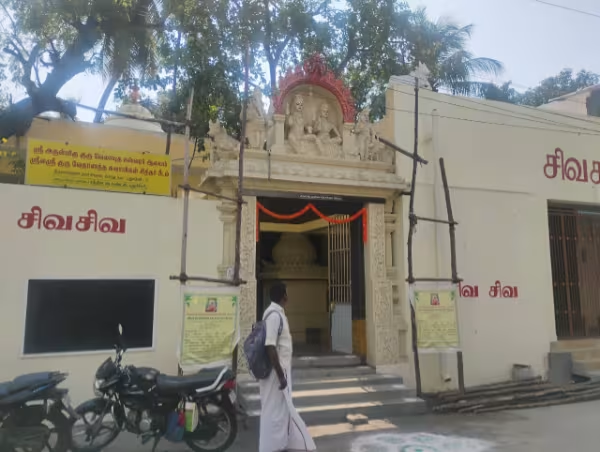
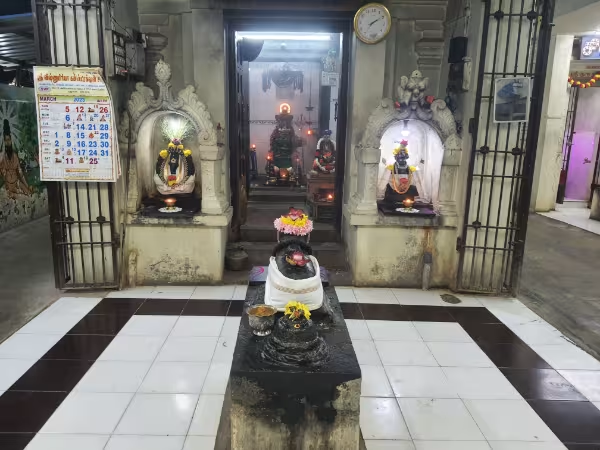
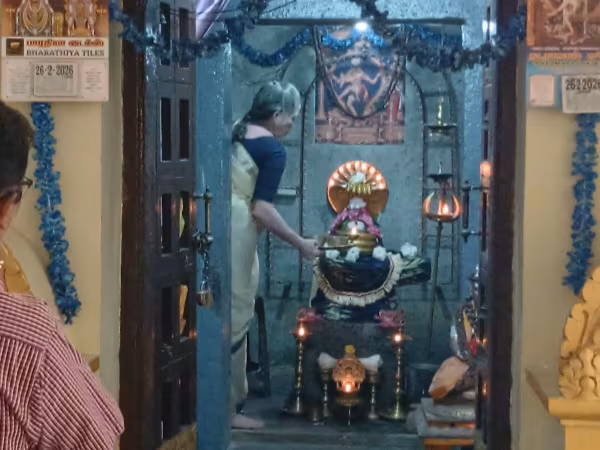
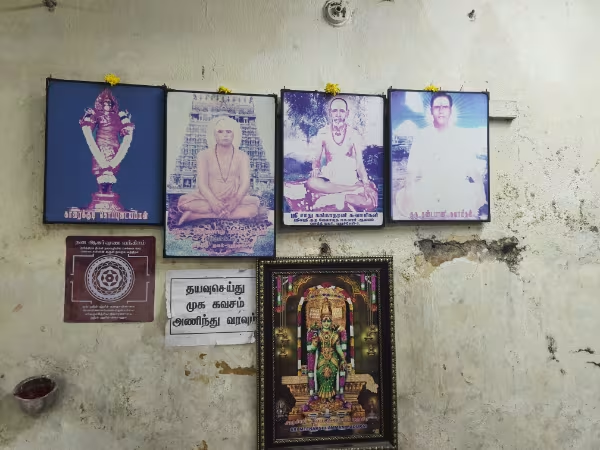
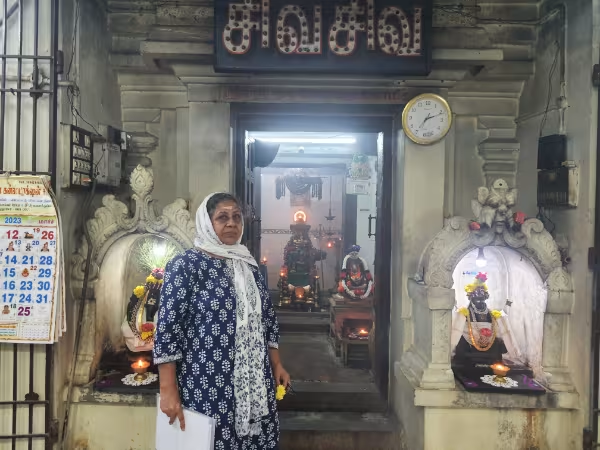
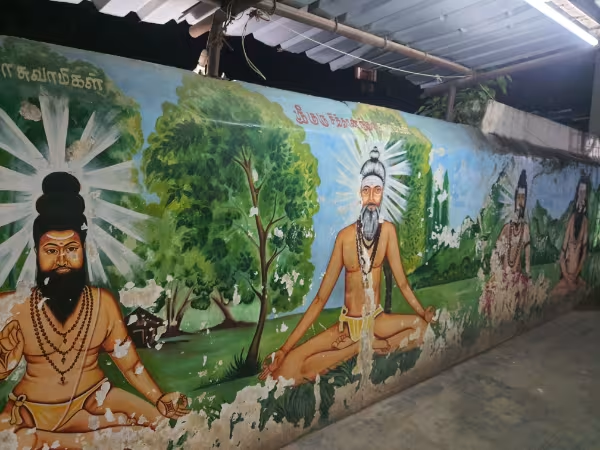
Worship and Rituals
Special worship: Pradosha worship, worshiping him on Thursday, new moon, and full moon days will remove our sorrows.
Thiruvasakam(Tamil sacred text) chanting will be held every month at Magam Nakshatra.
In the Purattasi month, Swami’s Guru Puja is celebrated.
Annabishekam on the full moon day of Aippasi month. Shivaratri of Masi month is very highly celebrated
Special Worship Days
- Pradosham
- Thursdays
- New Moon (Amavasya)
- Full Moon (Pournami)
Regular Spiritual Activities
Grand celebration of Maha Shivaratri
Monthly Thiruvasakam chanting on Magam Nakshatra
Guru Puja in the Tamil month of Purattasi
Annabishekam on Aippasi full moon